Venue technology fails at the joins
SociFlow is an independent advisory practice for stadia, arenas and live venues. It designs the commercial and operational architecture that turns separate systems, suppliers and teams into one connected venue.
AI does not fix fragmentation.
It inherits it.
Ticketing, access control, food and beverage, and fan engagement are usually bought separately, run by different teams and paid for from different budgets. Each works on its own. Together they share no common view of the fan and no real-time picture of the venue.
Layering AI on top scales that problem. The fix is structural: shared data foundations, aligned commercial incentives, and an operating model the venue can actually run. Light the joins and the problem becomes visible.
Where SociFlow works: the joins.
People, technology and money succeed or fail together
A venue is a socio-technical system. Its technology only performs when the people who operate it, the partners who deliver it and the commercial model that funds it are designed alongside it.
The idea comes from post-war research at the Tavistock Institute, which found that new technology and the way people organise around it rise or fall as one. SociFlow applies that discipline to high-footfall environments.
Three connected disciplines
Commercial Architecture
Designing who funds, delivers, owns and operates connected venue technology.
- Sponsor-funded models that can reduce the venue's net technology cost
- Delivery partner structures with engineering consultancies and integrators
- Commercial cases that hold up in the boardroom
Connected Venue Infrastructure
A shared data and identity foundation across the systems a venue already runs.
- Unified fan identity across ticketing, access, retail and engagement
- Real-time operational state, not end-of-day reports
- Integration strategy that avoids creating new silos
Human Flow & Operations
Understanding how people actually move, decide and behave, before technology is specified.
- Flow modelling grounded in Socio-Human Fluid Dynamics
- Digital twins to test interventions before they go live
- Operations designed for the teams who run them
High-footfall environments where people, systems and commercial pressure meet at scale.
Burj Khalifa
Lusail Stadium
Burj Al Arab
SSE Hydro
Disneyland Paris
Ferrari World
Universal
Yas Island Waterpark
Warner Bros.
Disney Cruise Line
The Human-Centric Layer Cake
Ten interdependent layers describing how culture, technology and operations cooperate in a high-performing venue. It is a socio-technical model: no layer works in isolation, and most failures happen where layers meet.
The Layer Cake is built on Socio-Human Fluid Dynamics (SHFD), SociFlow's method for understanding how people move and decide under pressure.
What is Socio-Human Fluid Dynamics?
SHFD is a way of understanding how people move, react and adapt in complex environments by borrowing principles from fluid dynamics. Pressure, friction and boundaries determine whether operational flow is smooth or turbulent.
- Pressure becomes crowd density or decision load
- Friction appears as confusion, delay or system failure
- Boundaries are the rules, interfaces and constraints that shape behaviour
SHFD treats operational flow as a designable quality. The aim is environments that perform with people rather than against them, designed for composure under pressure.
Culture & Rhythm
Defines meaning, fairness and belonging. Shared identity and values that ground all system decisions.
Technology must interpret culture, not script it.
Connectivity & Trust
Safe, consistent access and transparency that builds trust. Reliable infrastructure without surveillance.
Connection means people can depend on systems to work for them, not on them.
Human Flow Modelling
Anticipate needs to reduce friction. Real-time understanding of movement, behaviour and intent.
Model flows to predict operational needs before they become problems.
Operational Intelligence
Maintain composure under pressure through calm, adaptive decision-making tuned to operational rhythm.
Appropriate, contextual responses that preserve performance and safety.
Sustainability & Ecological Flow
Align energy and comfort with ecology. Environmental balance tuned to operational rhythm.
Operational efficiency and environmental responsibility designed together.
Accessibility & Inclusion
Maturity measured by who can fully participate.
A system's sophistication is measured not by its features, but by who it excludes.
Sensory & Emotional Design
Translate function into feeling and belonging. Intuitive spaces that create comfort and confidence.
Design communicates before words do. Sensory experience shapes trust and calm.
Safety, Confidence & Governance
Boundaries clear, rules fair and legible. Transparent systems without surveillance.
Safety comes from clarity, not control.
Learning & Feedback
Feedback as design material. Continuous calibration between performance and experience.
Systems that don't listen can't improve.
Hybrid & Adaptive Futures
Flex between digital and physical gracefully, adapting as needs change.
Integrated around operational and human needs, not around the technology.
The Method Loop
Five iterative stages that keep operational systems adaptive and precise. The loop does not end: each cycle builds on what was learned.
Discover
Understand operational and commercial reality through direct engagement, contextual mapping and systems analysis.
A clear picture of how the venue actually operates, not how it is assumed to.
Model
Build and test predictive models using real operational insight, calibrated with live signals.
Validated predictions that anticipate operational needs without disrupting live operations.
Design
Translate insight into a connected design: the systems, the operating model and the commercial structure that pays for them.
A design that works in practice because it fits how the venue operates and how it is funded.
Deliver
Work with delivery partners, integrators and venue teams to implement in phases, learning as each phase goes live.
Systems that perform in practice, because they are built with the people who operate them.
Prove
Measure operational performance and commercial impact through indicators that capture both efficiency and human outcomes.
Evidence of impact across operational, commercial and human dimensions.
The loop continues
After Prove comes Discover again. Venues evolve, contexts shift and systems must adapt with them.
Indicators of operational calm
Who can engage fully with the environment
How quickly operational confidence forms
Where systems resist rather than support people
Meaningful time spent, not just waiting
Observable markers of operational maturity
Sectors & environments
SociFlow focuses on environments where tens of thousands of people, dozens of systems and several commercial partners have to work as one.
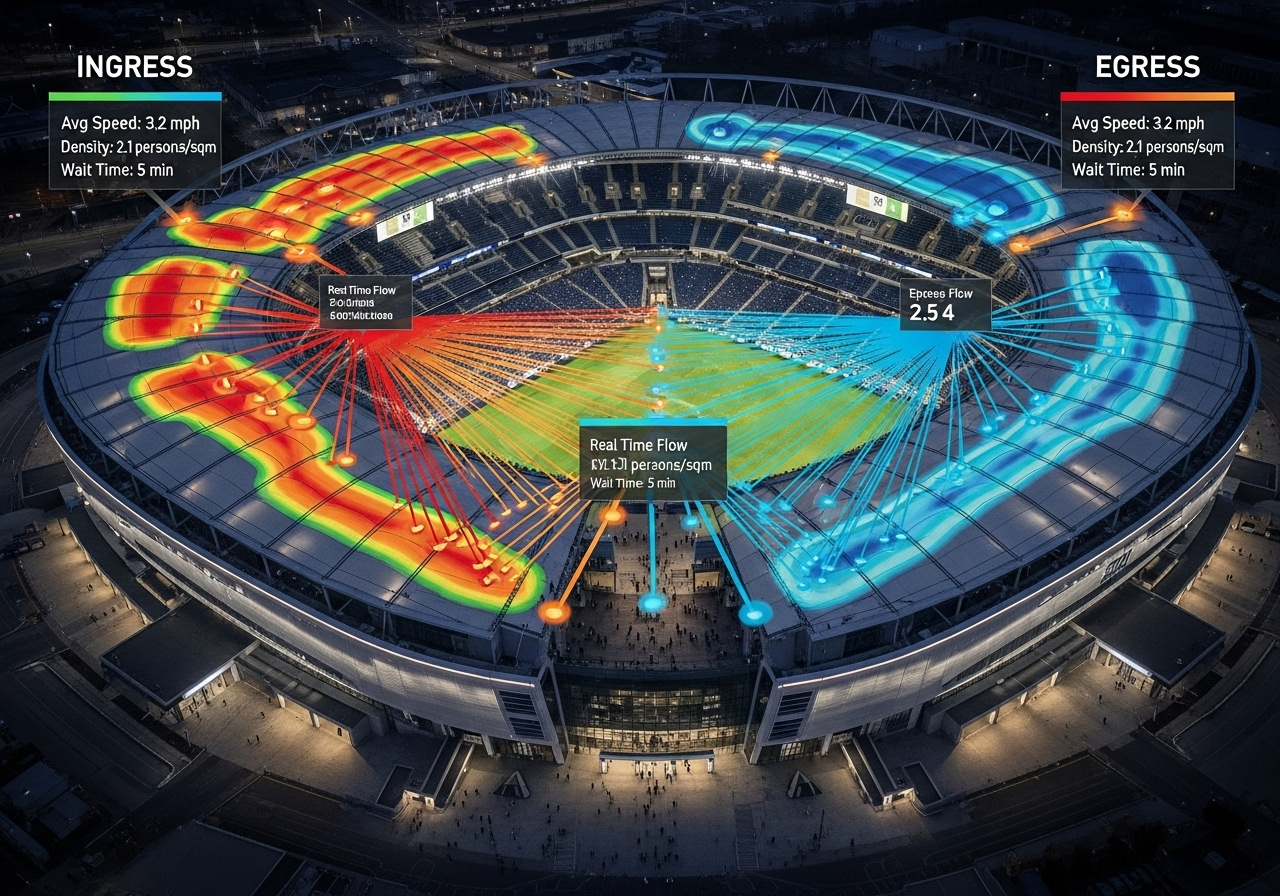
Stadia & Arenas
Match day at city scaleTens of thousands of people arrive, spend and leave within a few hours, across systems bought from different vendors. Connecting them is where the operational and commercial value sits.
Smoother entry, shorter queues, calmer crowds, safer movement
Real-time venue state, adaptive staffing, predictive interventions
Unified fan data, sponsor-ready propositions, higher secondary spend
Live Entertainment & Attractions
Experience is the productTheme parks, waterparks, theatres and resort venues where the guest journey is what is being sold. Flow, wayfinding and sensory design shape whether guests come back.
Shorter waits, clearer journeys, more time on the experience
Capacity and queue management, scheduling, staff deployment
Dwell time, per-capita spend, repeat visits
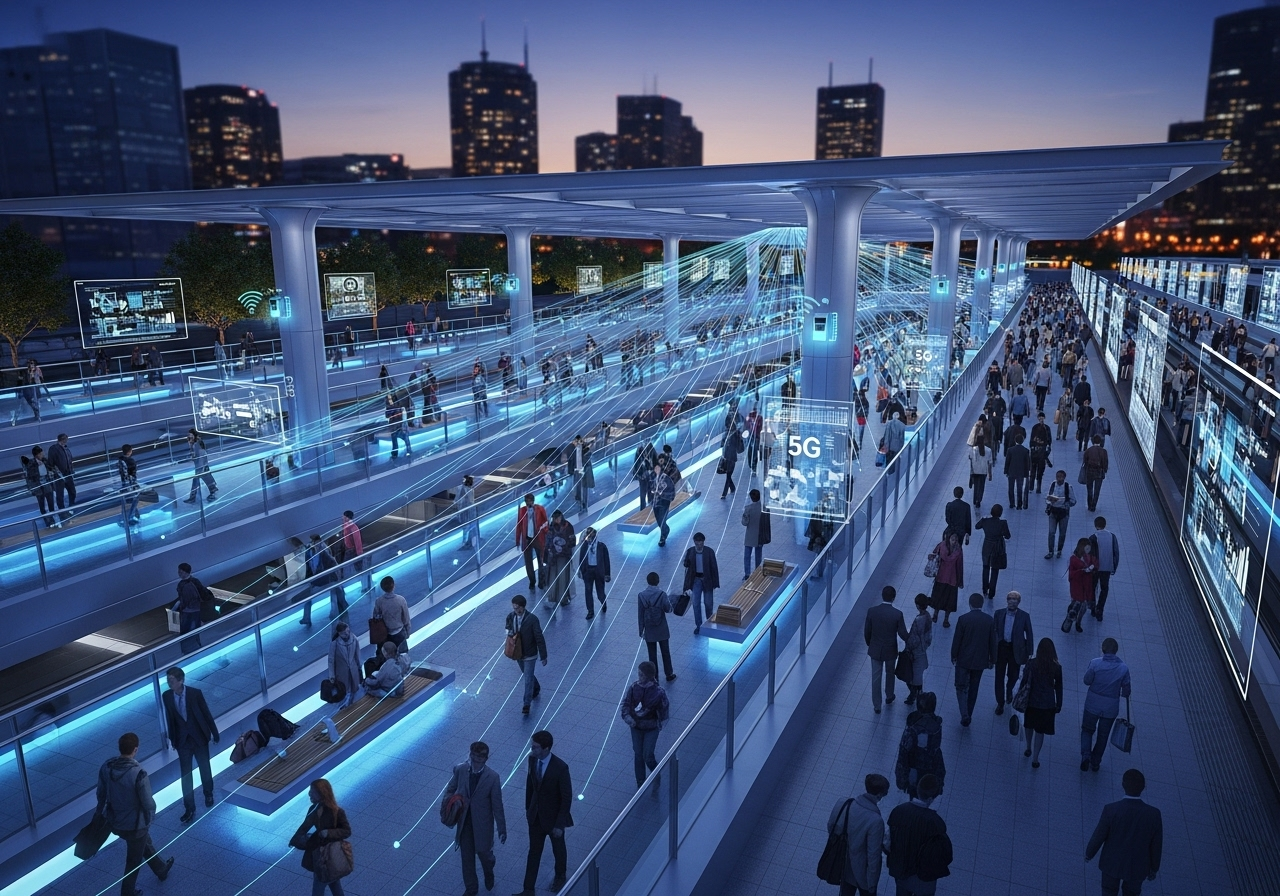
Transport Interchanges
Surges, not schedulesStations and interchanges serving venues and major events, where peak dynamics define the experience. Predictive flow intelligence helps prevent incidents before they form.
Reduced crowding stress, clearer wayfinding, improved sense of safety
Surge prediction, dynamic allocation, incident prevention
Better retail performance, fewer delays, coordinated event-day operations
Founder-led, independent
SociFlow is the independent advisory practice of Iain Quinn, based in Bath and working across the UK and EMEA.
Iain has spent 22 years delivering technology into complex built environments: from West End theatre and the Millennium Dome to stadia, theme parks, cruise ships and landmark buildings, with ETC, Martin Professional (HARMAN), Vari-Lite (Signify) and Ayrton.
That experience shaped a simple conviction. Technology succeeds or fails on how well it fits the people, operations and commercial model around it. SociFlow exists to design that fit.
For career, speaking and media enquiries, see iainquinn.com.
Start a conversation
Whether you run a venue exploring connected infrastructure, represent a brand interested in sponsor-funded venue technology, or lead an engineering consultancy looking for a specialist partner, SociFlow would like to hear from you.
Engagements range from focused advisory sessions through to full commercial propositions, across UK and EMEA markets.
"Understand how a venue actually operates before layering in technology."